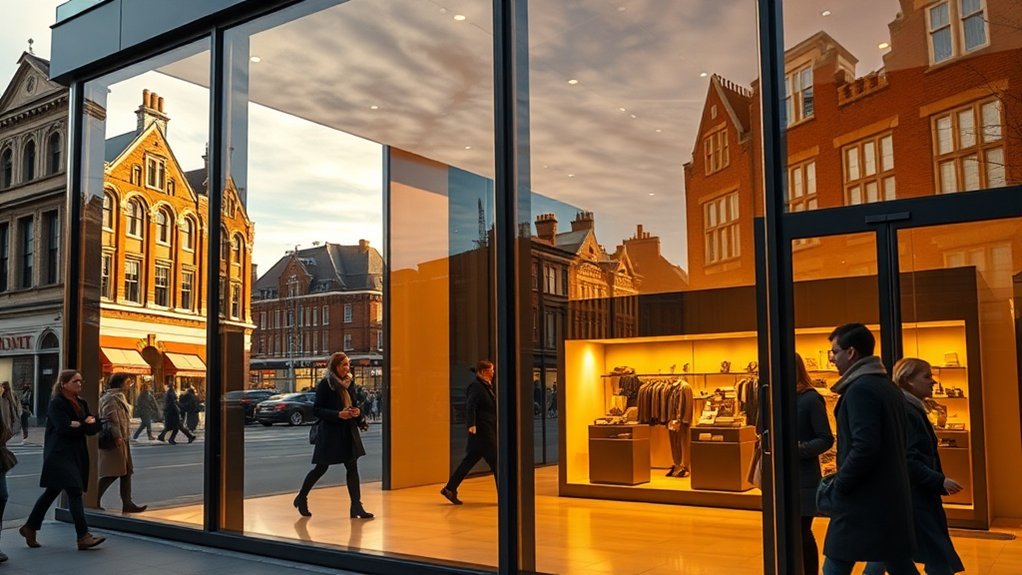
Good shop front glazing in Simplemarsh does three jobs at once: it puts your stock on show, it carries your brand along the street, and it has to pass the same performance tests as any other part of the building. A typical specification pairs low-E, argon-filled units and acoustic laminates with thermally broken aluminium frames and safety glass to the right standard, which brings heating costs down, keeps traffic noise out and satisfies Building Regulations. Switchable glass, graded manifestations and cut vinyl graphics then handle privacy, safety and wayfinding on a busy pavement. Below we cover frames, glass types, permissions, budgets and upkeep.
Key insights
- Low-E glass, argon-filled units and thermally broken frames cut heating bills and tame solar gain on Simplemarsh shop fronts.
- Acoustic laminated glass keeps traffic and late-night noise out of the shop without hiding the display or the branding.
- Manifestations, printed graphics and privacy films can be designed together so the frontage looks right and meets safety rules on Simplemarsh high streets.
- A compliant installation meets Building Regulations, BS EN 12600 impact classes and any Simplemarsh planning conditions for structure and access.
- Aluminium, uPVC and timber frames each suit a different mix of appearance, maintenance and performance, for new units or refurbishments.
How Shop Front Glazing Helps Simplemarsh Businesses
A new glazed frontage in Simplemarsh is not a cosmetic job. Done well it improves visibility, security and energy efficiency in one go, and it turns the most valuable square metres you rent into the thing that pulls people through the door.
Clear, well-specified glass lets more daylight onto the shop floor, so products read better and the lights run less. Low-iron glass, laminated panes or insulated units let you set the balance between transparency and thermal performance to suit the trade and the elevation, which keeps running costs under control.
Toughened or laminated glass also changes how secure the shop feels to staff and customers, because it stands up to a knock or an opportunist attack. Slim frames, uninterrupted sightlines and quality hardware remove friction between the pavement and the till, which is what modern retail along Simplemarsh’s streets is competing on.
Simplemarsh Rules and Permits for Shop Front Glazing
Three sets of rules bear on a new shop front in Simplemarsh. Planning permission controls how the frontage looks from the street. Building Regulations cover structure, fire safety, thermal performance and access. Safety glazing standards decide what glass can be used where people can walk into it. All three need settling before the frames are ordered.
Local Planning Permission
Simplemarsh’s planning policies try to balance fresh design against the historic character of its retail streets and conservation areas. When your application lands on a planning officer's desk, they will look at how the new frontage affects the rhythm of the parade, sightlines along the street and how the shop addresses the pavement.
Consent is usually needed if you change the proportions of the opening, replace a traditional frontage with full-height glass or introduce an illuminated frameless system. A pre-application discussion lets you test ideas such as oversized panes, minimal mullions or digital displays against the council's shop front design guide before spending on drawings. Accurate elevations, a materials schedule and a clear glazing specification speed up approval and give you a frontage that is modern yet sits comfortably in its setting.
Building Regulations Compliance
Planning consent is one hurdle; the Building Regulations are the other. For a Simplemarsh shop front you have to show acceptable U-values, a workable ventilation strategy and sound fixings back to the main structure, which matters most on narrow frontages or where the opening is being widened.
Your glazing contractor should supply the calculations, product certificates and as-built drawings that Building Control needs for sign-off, whatever the system: curtain walling, a framed shop front or a mix of the two.
- Fixings and transoms are designed for wind load and the dead weight of the glass, not simply copied from the last job.
- Thermal and ventilation figures are documented so sign-off does not stall at the end of the programme.
- Tinted glass and etched panels are specified for solar control and privacy, so they count towards compliance rather than against it.
Safety Glazing Standards
A compliant drawing is not the same as a safe shop front. Glass that people can walk into, lean on or fall against in Simplemarsh has to be laminated or toughened safety glass classified under BS EN 12600 and used in line with BS 6262, with the local authority's view on critical locations taken into account.
The sensible approach is risk-based. Look at pedestrian flow, how close vehicles get and where an attack is likely, then choose the glass build-up, interlayer and frame to match. Inspections are a chance to check edge cover, fixing centres, manifestation and breakage behaviour, not a box to tick.
Bringing in the structural engineer, façade consultant and fabricator early lets you check load paths and how the glass behaves after breakage, which is what makes a very transparent frontage safe as well as striking.
Aluminium vs uPVC vs Timber Shop Front Frames
Frame material shapes how a Simplemarsh shop front performs structurally, how warm it is, what it costs over its life and how it presents the brand. Aluminium is the usual choice for retail: it lasts, it allows slim sightlines and it carries large panes without flexing, which suits design-led shops with heavy footfall. uPVC is cheaper and insulates well, but its bulkier sections and limited span make it a poor fit for a wide, demanding commercial frontage. Engineered timber gives a warm, traditional look that conservation officers like, provided you are prepared for regular decoration and careful detailing to keep water out.
Pick the frame to suit how the shop trades, how much maintenance you can live with and how the display is lit and dressed:
- Aluminium where the frontage is wide, the display matters and the budget allows a powder-coated finish in the brand colour.
- uPVC for smaller units and tighter budgets where thermal performance counts more than slender frames.
- Timber on a period parade or in a conservation area, with a maintenance plan written into the budget from day one.
Toughened, Laminated and Security Glass Compared
All three are called safety glass in everyday speech, yet toughened, laminated and dedicated security glass react very differently to an impact or an attack, which matters on a Simplemarsh shop front facing heavy footfall and the occasional vandal. Toughened glass is heat treated for strength and breaks into small cubes, so it limits injury, but once broken it is gone and offers no resistance to a determined intruder.
Laminated glass bonds two or more panes with a PVB or EVA interlayer. It stays in one piece when cracked, cuts noise and filters UV, and it is much harder to get through, which suits town-centre retail.
Security glass stacks thicker laminated builds, sometimes with polycarbonate or specialist interlayers, to reach an EN 356 attack-resistance class. The fitting matters as much as the glass: correct edge cover, properly designed fixings and compatible sealants are what deliver the rated performance on site.
Choosing the Right Glass for Your Simplemarsh Shop
The glass specification sets the risk, the performance and the lifetime cost of a Simplemarsh shop front, so it should follow how the premises are actually used. Before fixing any glass, weigh up impact from footfall and passing traffic, the local vandalism record and the microclimate of the street, including wind funnelling between buildings.
Durability comes first. Specify glass and interlayers tested to the relevant BS and EN standards, with polished edges and coatings that resist scratching, delamination and thermal stress. Choose pane thickness and build-up for the span, fixing centres and wind load, not just the look.
- Thicker or laminated panes on wide spans so the glass does not deflect or fail early.
- Safety glass to the correct class wherever customers or staff could walk into it.
- Heat-soak tested toughened glass to reduce the risk of spontaneous breakage from nickel sulphide inclusions.
Balancing Visibility, Privacy and Branding in Your Glass
On a Simplemarsh parade or a roadside unit, the glass has to show off the display while managing privacy, glare and the brand. The aim is controlled transparency: fully clear where the merchandise sits, and selectively obscured where staff work or customers queue and pay.
Zoned tinting lets you reduce light and unwanted views in some areas without deadening the whole façade. Frosted film, applied full height or cut into precise manifestations, carries logos, lettering and wayfinding while keeping soft daylight and some visual privacy.
A practical mix is clear low-iron glass behind the hero products, with graduated tints and patterned frosting at the threshold and around consultation or fitting areas. Check every element against the brand guidelines, the main viewing angles from the pavement and the planning conditions so the frontage reads as one design.
Energy-Efficient Shop Front Glazing for City Premises
An energy-efficient shop front on a dense Simplemarsh street has to manage solar gain, heat loss and daylight at the same time as looking the part. Low-emissivity coatings, thermally broken framing and argon-filled double or triple glazing give you the savings without turning the glass grey. Getting the U-value and g-value right cuts heating demand in winter and stops a south-facing frontage overheating in summer.
Warm-edge spacers and careful airtight detailing at the perimeter mean the glass line works as a continuous thermal envelope rather than the weakest part of the shell.
- Lower heating and cooling bills every quarter the shop trades.
- A frontage that meets Part L without the need for compensating measures elsewhere.
- Documented U-values and g-values you can show a landlord, lender or auditor.
Noise-Reducing Shop Front Glazing for Busy Streets
The footfall that makes Simplemarsh’s shopping streets viable comes with traffic, deliveries and late-night noise that carries straight through ordinary glass. Keeping the shop calm means treating the frontage as an acoustic barrier without giving up transparency or branding.
Laminated acoustic glass uses a soft interlayer tuned to the frequencies that cause most trouble, especially the low rumble of lorries and buses. Paired with a wider cavity and panes of different thicknesses, it cuts more noise and limits vibration passing through the frame. Good perimeter sealing, decoupled frame junctions and properly detailed joints stop sound finding a way round the glass.
Frameless and Slimline Shop Front Glazing Designs
Frameless and slimline systems strip the frontage back to glass, giving a clean, contemporary look that puts the display and the brand first. Toughened or laminated glass sits in precision channels with discreet fixings, so the structure almost disappears while still meeting every safety and compliance requirement in Simplemarsh.
Low-iron glass keeps colours true, and decorative patterns or laser-cut branding can be added without losing clarity. Because the glass takes the weather directly, specify corrosion-resistant fittings, UV-stable interlayers and impact-rated glazing that shrugs off urban grime and the odd knock.
- A flagship look with no visible mullions interrupting the display.
- Structural glass fins or channels engineered to carry wind load without bulky framing.
- A frontage that reads as modern from across the street.
Doors and Access Control in Your Shop Front Glazing
Doors within the glazing need thinking through as early as the glass. Door type, clear opening width and the flow of people through the entrance all have to satisfy Building Regulations and the Equality Act duties that replaced the DDA. Card readers, keypads and remote locking can be built into the aluminium profiles and automatic operators rather than bolted on later. Matching hardware, glass and access control gives a Simplemarsh premises an entrance that is secure, quick to use and easy for everyone.
Door Types And Layout
The door type you choose affects security, how people move through the shop and whether the frontage complies. Pivot, sliding and bi-fold doors each change the circulation route, the clear opening and the escape strategy, so the choice should follow the risk profile and the experience you want customers to have.
Coordinate any tinting with the door zone so glare and solar gain are controlled without hiding the high-value display from the street, which also keeps natural surveillance intact. Thresholds, side panels and transoms have to meet Approved Document M and BS 8300 for level access and visual contrast.
- Hardware that feels solid and closes cleanly every time.
- An arrival route that is obvious from the pavement to the counter.
- A level threshold and contrasting door edge so the entrance works for everyone.
Smart Access Integration
Door layout and hardware set the physical limits; smart access turns the entrance into a perimeter you can control and audit. Card readers, keypads or phone credentials mounted within the aluminium framing keep sightlines clean while enforcing who gets in and when.
Automatic operators can be triggered by presence sensors, a time schedule or a verified credential, so the door behaves differently at opening time, during trading and after close. Networked controllers record every event, giving you a history, occupancy data and a quick lockdown if needed.
Link the access system to the alarm, CCTV and tills to raise exception alerts for a forced door, out-of-hours entry or tailgating. On Simplemarsh’s busier streets this is how you keep the shop open and welcoming without losing control of it.
Shop Front Security and Anti-Theft Glass Options
A Simplemarsh shop front is a target at any hour, so the glass needs to resist attack rather than just look good. The usual combination is laminated security glass, anti-bandit interlayers and structurally bonded framing, which delays entry long enough for the alarm to do its job while leaving the display lit and the entrance open by day.
Specify glass to EN 356 class P6B to P8B, with concealed locks, anti-jemmy profiles and adequate silicone bite depths. Switchable privacy interlayers can hide the stock after hours while the façade stays clear during trading.
- Fewer smash-and-grab losses and less danger to staff and customers.
- Stock protected without resorting to shutters that deaden the street.
- Reduced risk of repeat attacks once the first attempt fails.
Customising Your Shop Front Glazing With Colours and Finishes
Security and performance come first on a Simplemarsh shop front, but colour and finish are what tie the glazing to the brand and the parade. Treat the glass as a surface to design, with a colour scheme that works with the façade materials, the interior lighting and the display zones.
Ceramic-fritted or back-painted glass gives dense, hard-wearing colour; low-iron glass is the base where exact colour matters. Tinted interlayers combined with selective solar-control coatings manage g-values without dulling the view of the display.
Frames and doors in powder-coated or anodised aluminium let you match matt, satin or metallic textures to handles, cappings and stall risers. Check that every finish will stand up to the cleaning regime and the level of pollution on a Simplemarsh main road.
Signage, Manifestations and Graphics on Shop Front Glass
Signage, manifestations and graphics turn the glazing into a branding asset that works all day on the street. The design has to balance impact with practical needs such as privacy, safety markings and Building Regulations. With bespoke artwork, specialist films and durable print methods, you can get a frontage that looks the way the brand guide says it should and still does its job.
Branding And Visual Impact
The shopfront glass is where most passers-by first meet the brand, so its graphics should work as one planned system rather than a few stickers. A well-designed façade turns brand identity and storytelling into people stopping, looking and coming in.
Vector-cut window films, reverse-applied vinyls and digitally printed interlayers create layered depth that reads from across the road and from a metre away. Colour profiles should be calibrated so the brand colours hold up under both shop lighting and daylight, through every season.
The glazing should prompt a reaction as well as communicate clearly:
- Spark curiosity before the customer reaches the door.
- Signal confidence, professionalism and attention to detail.
- Make the shop instantly recognisable along Simplemarsh’s streetscape.
Privacy, Safety And Compliance
Brand-led glazing still has to control sightlines, manage risk and meet the legal standards for glass safety and accessibility. The design should combine visual communication with compliance so the shopfront is both a brand asset and a safety system.
Correctly placed manifestations deal with privacy, prevent people walking into clear glass and meet Building Regulations and Equality Act requirements. Gradients, fritted patterns or one-way films can shield sensitive areas while leaving daylight and the display untouched.
Graphics should follow documented safety rules: defined contrast against the background, minimum band heights and consistent datum lines. A glazing specialist can turn signage, decals and window graphics into an engineered interface between customers, staff and the street.
Custom Design And Materials
The primary glazing sets the performance; the applied films, manifestations and graphics decide how the shopfront behaves as a communication and control surface. The point is not just to brand the glass but to manage light, views and the way people move through it.
High-performance vinyls, ceramic-frit graphics and digitally printed interlayers balance durability against design, keeping clarity and colour stable for years. Wayfinding, brand messages and regulatory manifestations can all be brought into one coherent glazing package.
- Edge-to-edge visuals that turn passers-by into visitors.
- Precisely aligned graphics that signal care and confidence.
- A consistent visual language across every glazed elevation so customers recognise the brand at once.
Planning Your Shop Front Glazing Timeline and Budget
A shop front in Simplemarsh needs a sequenced programme and a realistic budget tied to the trading calendar, the local rules and the wider fit-out. Start with a feasibility phase that takes in planning constraints, especially where the building's age or conservation status means longer approvals.
Then fix the design, the performance criteria (U-values, acoustic rating, security class) and the interfaces with the base build, and book lead times for bespoke systems and toughened or laminated units. Allow float for surveys, value engineering and statutory inspections.
On the budget, separate supply, installation, access equipment, out-of-hours working and contingency. Model lifecycle cost rather than capital cost alone, including maintenance, replacement intervals and the energy savings from high-performance glass.
Choosing and Working With Simplemarsh Shop Front Installers
A sound programme and budget only hold if the installer can deliver them, so the next step is choosing a Simplemarsh shop front contractor with the right competence, capacity and certifications. Ask about their record with complex glazing systems, thermal performance targets and security specifications.
Favour firms who understand how transparency, sightlines and frame profiles affect how customers engage with the shop and how the interior reads. During procurement, ask for detailed method statements, lead-time commitments and risk assessments.
- Ask for photographs and references from similar shops on a comparable Simplemarsh high street.
- Check that the fitting team, not just the sales team, has installed the specified system before.
- Confirm who commissions and demonstrates the automatic doors and access control at handover.
Once appointed, agree clear communication routes, coordinated site logistics and documented quality sign-offs.
Keeping Your Shop Front Glazing Clean and in Good Condition
Keeping shop front glazing at its best needs a structured routine covering daily cleaning, protection from knocks and scheduled inspections. The right cleaning agents, tools and technique reduce surface abrasion and prevent scratches, edge damage and seal failure. A simple long-term plan extends the service life of the glass, keeps it clear and protects what you have spent on a busy Simplemarsh streetscape.
Daily Cleaning Best Practices
Shop front glass is built to last, but in Simplemarsh’s urban air its long-term performance depends on consistent daily cleaning. Clean glass is not only tidier; it makes the display look better and the shop more inviting.
Use a non-abrasive microfibre applicator, a pH-neutral glass cleaner and deionised water to avoid spotting. Work from the top down in overlapping passes to prevent streaks and give an even finish. While cleaning, look at joints, seals and frames for early signs of contamination or water getting in.
Make it a fixed-time routine, ideally before opening, so the façade is always ready for the first customer.
- Crystal-clear glass that shows the display at its best.
- A frontage that signals care and attention to detail.
- More passing footfall converted into visits.
Preventing Scratches And Damage
Beyond daily cleaning, you need a defined plan to stop scratches and damage shortening the life of the glass and forcing an expensive panel replacement. Start by specifying toughened or laminated glass with factory-applied protective coatings that resist abrasion from airborne grit and contact.
Manage the areas where people and objects touch the glass. Position signage so customers, trolleys and deliveries do not contact the glass edges or corners, where impact stresses concentrate. Stainless steel bollards, low barriers or handrails along busy runs intercept collisions without blocking the view.
Design external lighting so fittings, conduits and access points never require technicians to lean tools or ladders against the glazing. Dedicated anchors and removable guards keep maintenance work off the glass surface.
Long-Term Maintenance Tips
Protecting the glass from impacts and scratches is half the job; the other half is a structured maintenance regime that keeps it performing and looking as specified across its service life. Set a cleaning schedule with pH-neutral detergents, deionised water and non-abrasive applicators to protect clarity and coatings. Inspect perimeter seals, gaskets and fixings quarterly to stop moisture getting in, fogging and cold bridging that would spoil the lighting and the window display.
Fold maintenance into the wider asset plan: log inspections, track defects and budget for resealing and hardware replacement. Clean, undistorted glass maximises daylight, raises the perceived value of the stock and keeps customers engaged.
- Protect the brand's first visual contact with the public.
- Keep the lighting design looking as it was intended.
- Turn passing footfall into deliberate visits.
This service is delivered by our Simplemarsh glaziers.
Frequently Asked Questions
How Does Shop Front Glazing Affect My Insurance Premiums and Policy Requirements?
Insurers price a shop front on how well the glass, locks and frames resist attack and whether they meet standards the underwriter recognises. Laminated or toughened glazing, anti-shatter film and certified locks and framing lower the perceived risk and often earn a discount. Some policies require documented impact ratings, an installer's certificate and evidence of regular maintenance, and failing to meet those conditions can void a claim. Share the glazing specification with your broker before ordering so the frontage matches what the policy expects and you pay the right premium.
What Happens if My Shop Front Glass Breaks Outside Normal Business Hours?
A broken frontage at night triggers the emergency glazing routine. A large share of breakages happen outside trading hours, so the priorities are fast temporary boarding, a secure lock-up and photographs of the damage for the insurer. Once the shop is safe, the replacement glass is specified to BS 6262 and the relevant security standard, often an upgrade to laminated safety glass or an anti-bandit build. It is also a chance to rethink the glass: low-iron or coated units can improve clarity and branding at the same time as making the frontage harder to break next time.
Can I Temporarily Board up My Frontage During Glazing Replacement Without Losing Customers?
Yes, if you treat the boarding as a designed temporary frontage rather than a sheet of ply. Clean hoarding wrapped in branded vinyl, with clear polycarbonate view panels, keeps the shop visible from the street. Large wayfinding and an obvious “open as usual” sign stop regulars assuming you have closed. LED strip lighting and a QR code linking to online ordering keep the display working after dark. Agree a tight programme with the glazier so the boards are up for days rather than weeks, and the temporary solution still looks deliberate.
How Do Seasonal Window Displays Interact With Different Types of Shop Front Glass?
Match the display method to the glass. On standard toughened panes, rely on internal lighting and low-tack fixings so nothing marks the surface. Frosted glass suits diffused backlighting and designs that use the clear areas as negative space. Decorative film allows modular, removable campaigns that also add UV filtering and glare control. Laminated units carry heavier vinyl and digital signage, and low-iron glass gives the truest colours for high-impact branding. Whatever the glass, avoid solvent-based adhesives on coated surfaces and remove old vinyl with care.
What Warranties and Guarantees Are Typical for Commercial Shop Front Glazing Installations?
Typical cover is 10 to 25 years on sealed units, 5 to 10 years on frames and finishes, and 1 to 2 years on workmanship. The warranty should name seal failure, spontaneous breakage of heat-soak tested toughened glass, hardware operation and coating integrity, with stated response times and on-site repair or replacement terms. Expect impact damage and vandalism to be excluded. On a complex or frameless project, negotiate performance guarantees tied to the agreed thermal, acoustic and façade integration figures, and confirm the guarantee transfers if the lease changes hands.
Summary
Treat shop front glazing as a trading asset rather than a repair, and the frontage starts earning its keep. Matching frames, glass and security to Simplemarsh’s planning and Building Regulations avoids costly delays, and a specialist installer working to a realistic programme and budget gives you a compliant, durable, low-maintenance frontage that shows off the brand and keeps the footfall coming. Call us for a free site survey and quotation for shop front glazing in Simplemarsh.