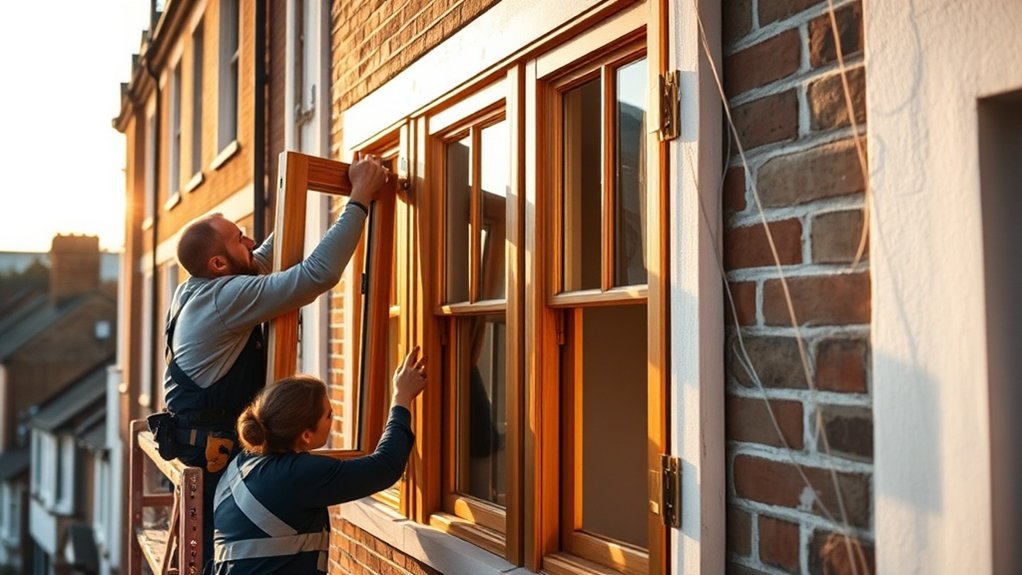
Wooden window installation in Addlestone starts long before the joinery arrives. We check whether planning permission or conservation consent is needed, survey every opening for squareness, damp and structural condition, and only then specify the timber (engineered redwood, oak or Accoya), the glazing and a microporous finish. On site the frames are set on breathable membranes with drained rebates and fixed to allow for seasonal movement. The rest of this page covers styles, glazing, costs and the mistakes that decide how long the windows last.
Key insights
- Find out early whether planning permission or conservation consent applies, especially on listed buildings or where style, size or glazing pattern will change.
- Match timber species, window type (sash or casement) and glazing (slimline or standard double) to the building so character and performance both hold up.
- A proper installer surveys the structure, measures to the millimetre, allows tolerances, and uses breathable membranes, drained rebates and cill flashings.
- Use a FENSA-registered Addlestone installer with experience of period housing, Article 4 areas and like-for-like joinery replication.
Step-By-Step Plan for Timber Window Installation in Addlestone
A timber window installation in Addlestone goes smoothly when every stage is planned: assessment, measurement, preparation, fitting, sealing and a final check. We survey each opening first, looking at squareness, the condition of the lintel and cill and the moisture content of surrounding masonry. Measurements are recorded with allowances for packers, insulation and the natural movement of the wood. Frames and sashes are then finished in the workshop, including the hidden edges and end grain that are impossible to coat once the window is in, and hardware is fitted and tested before delivery.
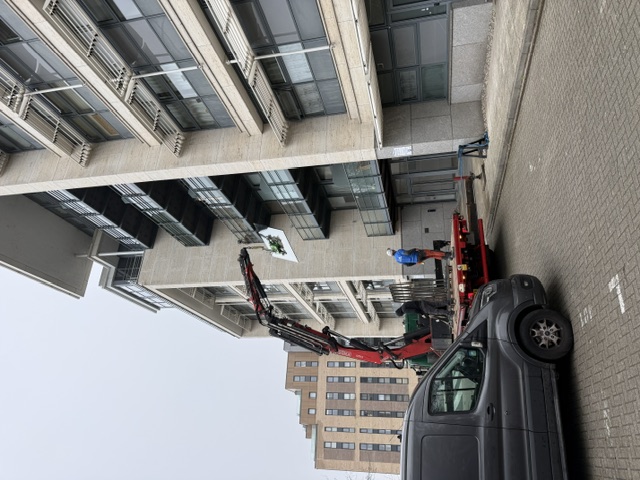
On the day, the old units come out, the reveals are prepared and membranes or tapes go in. The frame is set with a laser, fixed through sound structure, and the gap is filled with compatible insulation before airtight and weathertight tapes or sealants are applied. The last step is to re-check hardware, drainage paths and any damage to the finish.
Planning Permission and Conservation Rules in Addlestone, KT15
Before you order wooden windows, confirm whether the project needs planning permission under national rules and Addlestone council policy. Changes to window style, material, glazing pattern or opening size are the usual triggers. In a conservation area or on a listed building the controls are tighter again, and you will be expected to match the original profiles, sections and sightlines as closely as possible.
When Planning Permission Applies
Planning law in Addlestone treats any change to a building’s external appearance as development, and that can require consent. Altering the window dimensions, changing how the lights open or switching the frame material in a way that noticeably changes the façade will normally need an application. The same applies if you break up a uniform pattern of windows on an elevation seen from the street. For performance upgrades such as triple glazing or trickle vents, show the energy gains alongside evidence that the visual change is minimal. The council’s planning portal is the place to check the constraints on your address.
Rules For Conservation Areas
Within a Addlestone conservation area, any change to style, frame profile, glazing pattern or opening method visible from a public place is judged against the adopted appraisal and design guide. Check first whether an Article 4 Direction has removed permitted development rights; if it has, even a like-for-like replacement needs consent. Specify timber species, section sizes and joinery details that reproduce the original design, and put the performance improvements where they cannot be seen: slimline double glazing, acoustic laminates and modern draught-proofing within the beads. Keep the external sightlines and proportions identical and the application is far more likely to succeed.
Matching Timber Windows to Addlestone Property Styles
Matching timber windows to Addlestone, KT15 housing starts with reading the building: its period, the composition of the façade and the original joinery details. Note the brick bond, stone dressings, lintel shape and cill profile, then set frame depths, sightlines and glazing bar patterns to fit those fixed features so modern detailing sits comfortably alongside historic fabric.
- Pin down the building type, whether Georgian terrace, Victorian villa, Edwardian mansion block, inter-war semi or post-war infill, and note the typical mullion spacing and pane layout for that era.
- Measure existing reveals, head heights and masonry openings to fix the frame sections and tolerance gaps.
- Choose stains, microporous paints and ironmongery that follow precedents on the same street.
Sash, Casement or Bespoke: Choosing Your Window Style
Deciding between sash, casement and bespoke timber windows for a Addlestone property comes down to the geometry of the façade, how the window needs to open and the planning context. Sliding sash windows suit period terraces: vertical operation, balanced sightlines and a traditional look, with slim meeting rails, concealed weights or spring balances and fine glazing bars to keep the glass area generous. Casements work well in deeper reveals and seal more tightly; friction hinges, multi-point locking and a controlled night-vent position give an airtight window that still ventilates easily.
A bespoke design makes sense where openings are irregular, where you want integrated shading or where you need a mix of fixed, sash and casement modules in one frame. Line the mullions up with the internal layout and the external rhythm and the result looks intended rather than improvised.
Timber Types That Work Best for Addlestone Homes
The timber species has to be chosen for how it performs in Addlestone, not just how it looks. Engineered softwood, oak and Accoya differ in density, stability and resistance to moisture and insects, and the right choice keeps the frame straight and the coating intact for decades.
Best Timber Species
- Engineered European oak – quarter-sawn or laminated sections give stable grain and crisp detail. Oak machines cleanly for slim frames and quality ironmongery and takes modern water-based finishes well.
- Accoya (modified radiata pine) – the choice for tight tolerances and very little movement. Its even grain suits fine gaskets and heavier triple glazing, and it carries a long anti-rot guarantee.
- Red Grandis or laminated redwood – defect-free laminated stock with consistent density. Both pair well with water-based microporous coatings, allowing thinner films and longer intervals between recoats.
Durability In Urban Climate
In the dense, polluted microclimate of Addlestone, KT15, how long timber lasts has less to do with hardness than with dimensional stability, moisture resistance and how well it holds a coating. Engineered softwoods such as laminated Scandinavian pine, or modified timbers that have been acetylated or heat-treated, are stable, take factory coatings evenly and need less frequent attention. Dense hardwoods like oak make excellent premium frames, but only where moisture is controlled with deep rebates, ventilated glazing and sealed end grain. Ask for FSC or PEFC certified stock and factory-applied microporous finishes, and add drained-and-vented glazing so the frames last in Addlestone’s demanding conditions.
Single vs Double vs Triple Glazing for Timber Windows
Traditional timber frames can carry single, double or triple glazing, but the three behave very differently in heat loss, noise, weight and cost, so the choice belongs at design stage. For Addlestone homes, energy efficiency and sound insulation should drive the decision.
- Single glazing – only where regulations allow it, typically on listed buildings. It is light and cheap but has a poor U-value, little noise reduction and a high risk of condensation on the inside face.
- Double glazing – the sensible baseline. Low-E coatings, warm-edge spacers and argon fill cut heat loss and noise without overloading the sashes, and slimline units suit shallow heritage rebates.
- Triple glazing – use selectively. It improves U-values and quiet further, but the thicker, heavier unit loads hinges and cords and needs stouter timber sections and better ironmongery.
Heritage Character vs Modern Performance: Finding the Balance
Planning policy in Addlestone usually puts the historic streetscape first, so timber windows have to reconcile conservation expectations with modern thermal, acoustic and security performance. Begin by recording the existing sightlines, measuring the stiles, rails and glazing bars, then specify new sections that reproduce those profiles while leaving room for a high-performance glass unit.
Keep the traditional putty lines, sash proportions and horns, but build the frame from engineered timber, hide trickle vents in the head and use low-iron, low-E glass. Where the rebate is shallow, slimline double or vacuum glazing fits without changing the external face. Brush and compression seals set into the parting and staff beads improve airtightness invisibly, and ironmongery with a traditional form can carry modern locking inside.
Costs of Timber Window Installation in Addlestone, KT15
Several linked factors decide what you pay for timber window installation in Addlestone. Frame material comes first: engineered softwood is normally cheaper than hardwood, though hardwood may be the better match for a period building. Glazing comes next: double or triple glazing, warm-edge spacers and low-E coatings add to the price but reduce heat loss for the life of the window.
Labour should be itemised too. Installers charge per window, per day or per metre of frame, with extra for difficult access, scaffold or restricted parking. Allow for planning fees and any conservation survey. Finishing, ironmongery and acoustic or security upgrades complete the picture and shape the lifetime cost rather than just the invoice.
Common Timber Window Mistakes to Avoid in Addlestone, KT15
Even top-quality joinery will fail early in Addlestone’s urban climate if a few recurring mistakes are made. The most damaging is poor moisture management: leaving out drained and ventilated rebates, breathable membranes and flashed cills allows water to sit against the timber and rot it from the inside. Mismatched coatings are the next problem. A brittle, non-breathable paint on softwood traps moisture under the film; a microporous system suited to the substrate lets it escape.
Tolerance planning is often overlooked. Without an allowance for differential movement between frame, sash and masonry, joints open, gaskets fail and the acoustic seal is lost. Finally, cheap ferrous ironmongery corrodes quickly in polluted or coastal air, so specify stainless or properly coated fittings.
Frequently Asked Questions
How Do Timber Windows Impact My Addlestone Property’s Resale Value?
Good timber windows generally add to resale value because they improve both performance and perceived quality. With modern glazing the lower heat loss shows up in a better EPC rating and lower bills that a buyer can see. Slim sightlines, accurate joinery and a finish chosen to suit the house improve kerb appeal, which matters on period streets where buyers notice the difference between original-style windows and ill-fitting replacements.
Are There Grants or Subsidies in Addlestone for Upgrading to Timber Windows?
Funding is limited and patchy. National schemes such as ECO4 and the Great British Insulation Scheme focus on insulation and heating rather than windows, though some councils run their own energy or heritage grants worth checking. Keep invoices, product certificates and the installer’s accreditation so you can evidence the energy saving if a future retrofit scheme opens up, and ask the council’s energy team what is available before you order.
Will New Wooden Windows Affect My Home Insurance Premiums?
Possibly, depending on how the insurer assesses risk. Tell them about the change, because new windows usually improve security but timber also carries a maintenance expectation. Highlight the locking specification, the glass and the FENSA certificate showing professional installation. Fitting alarm sensors or smart locks at the same time can sometimes keep the premium level or bring it down slightly.
How Do Timber Windows Influence Indoor Noise Levels Near Busy Addlestone Roads?
Timber is a dense, naturally sound-absorbing frame material, and combined with the right glazing it turns heavy traffic into a faint background hum. The main tools are laminated acoustic glass, panes of different thicknesses, a wider cavity and continuous compression seals around the sash. The perimeter joint with the wall also needs acoustic sealing, otherwise sound flanks around the frame.
Can I Integrate Smart Locks or Sensors Into New Timber Window Frames?
Yes, provided the hardware is planned at design stage rather than added afterwards. Specify reinforced keeps, concealed cable routes and multi-point gearing compatible with the smart lock you want. For monitoring, choose low-profile magnetic or reed sensors rated for timber frames and double-glazed rebates, and coordinate the power supply and wireless protocol with the drainage and ventilation paths so cables stay dry.
Summary
Done well, modern timber windows with double glazing cut heat loss dramatically compared with old single glazing while keeping the character of a Addlestone, KT15 house. Measure carefully, confirm conservation requirements in writing and insist on factory finishing, and the windows will give decades of service. Call us for a free survey and quote.